
Grand Hotel Royal
Sorrento, Italy
There are hotels that seem built to host a moment, and others that appear to bottle entire decades. The Grand Hotel Royal in Sorrento does both. Perched on a cliff above the Bay of Naples, its Belle Époque bones clad in 1960s finery, it has the rare ability to make you feel you have wandered not merely into a hotel, but into a film reel. You half-expect Audrey Hepburn to glide across the marble floor on a Vespa, or Marcello Mastroianni to order another Negroni from the barman, still wearing his sunglasses after dark.
Opened in 1962, when the world was discovering the dolce vita in all its forms, the Royal has weathered time with enviable grace. While many contemporaries slipped into pastiche or faded into memory, this palazzo-on-the-rocks has been kept immaculate, polished marble gleaming, chandeliers sparkling, frescoes nodding down with benevolent approval. Stepping inside feels less like entering a hotel and more like joining a lineage of travellers who believed glamour was best expressed in linen suits and silk scarves.
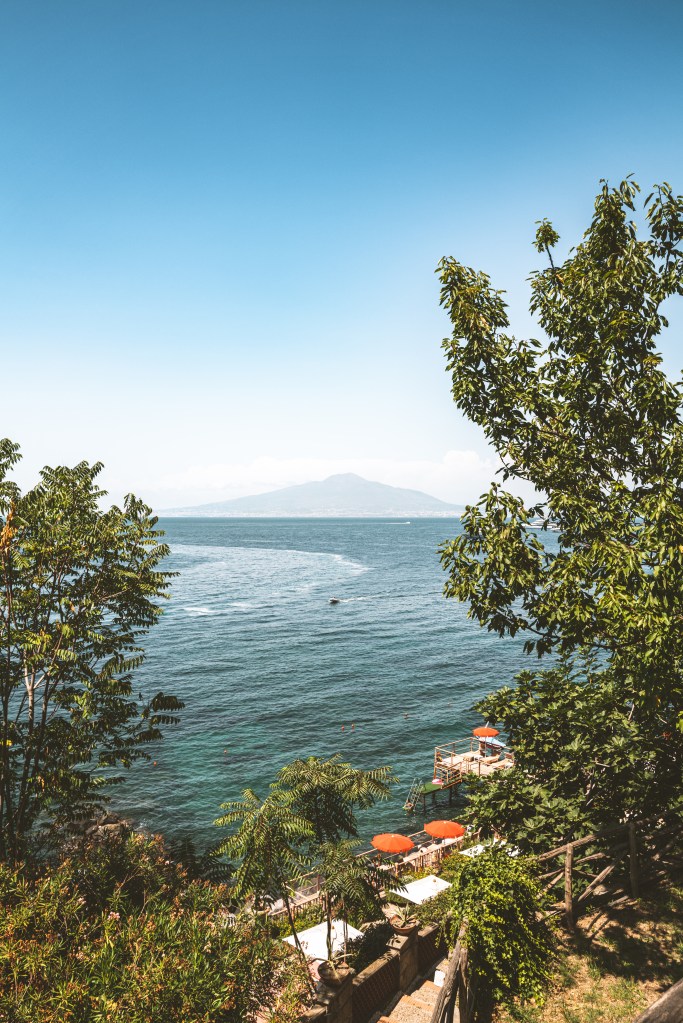
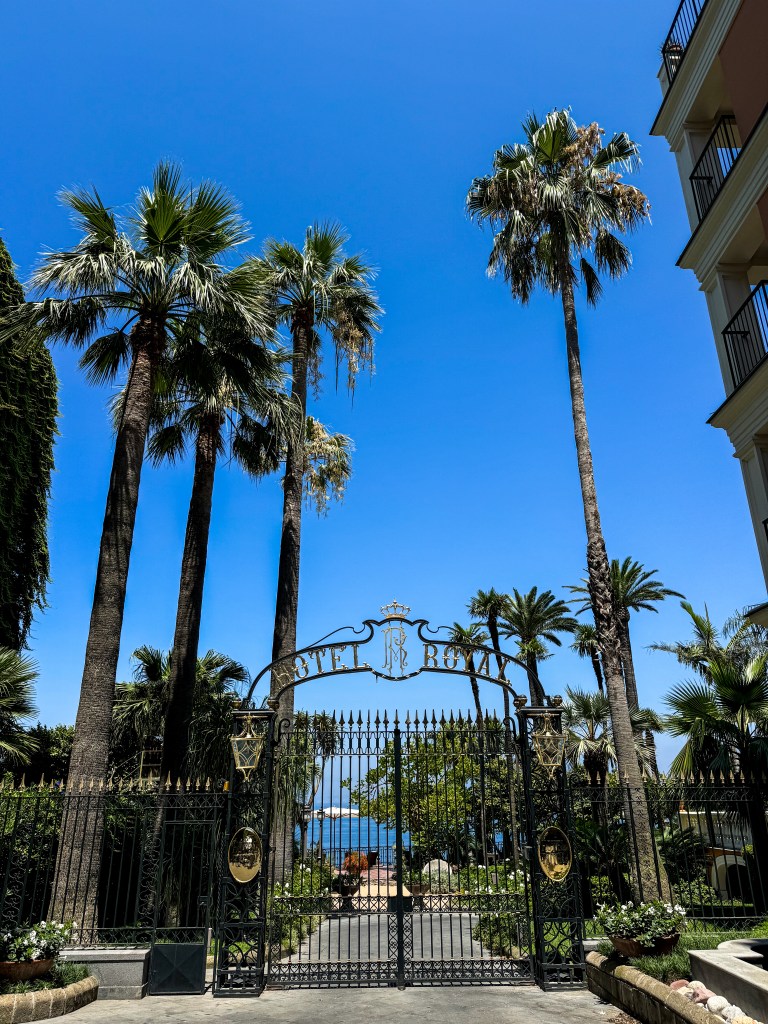
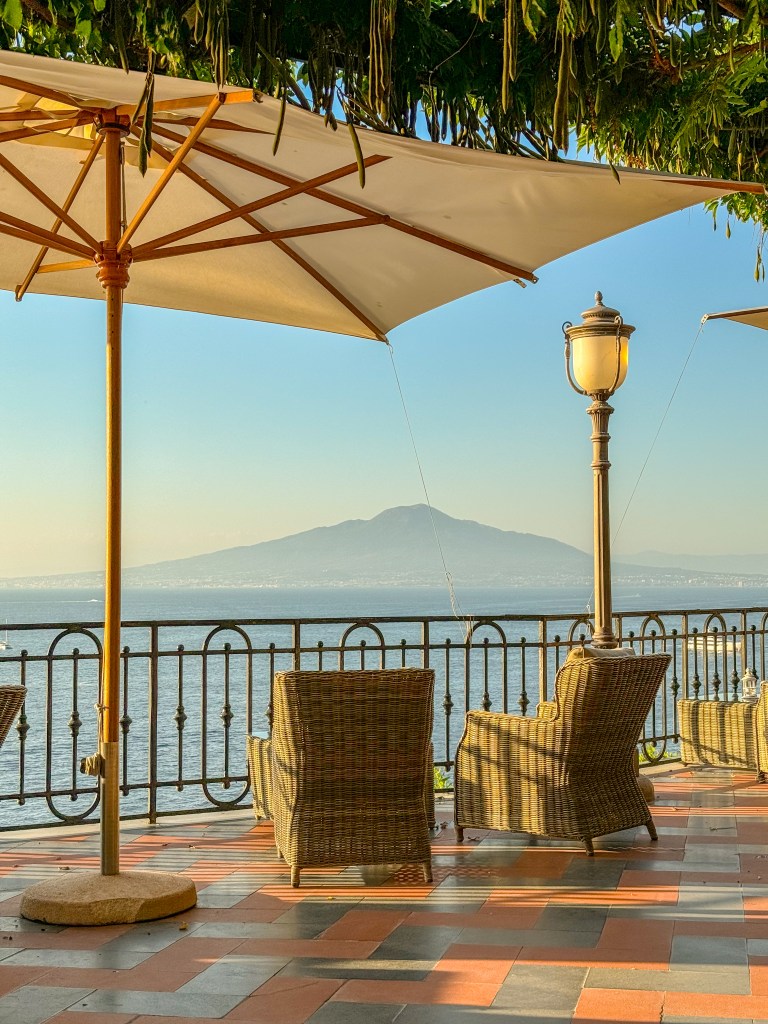
The sense of theatre extends outdoors, where terraced gardens tumble down towards the water. Orange and lemon trees scent the air, bougainvillaea riots along the balustrades, and every turn of the path opens a fresh vignette: wicker chairs beneath parasols, a view of Vesuvius that could silence a table, the slow procession of ferries heading across to Capri. The pool, is a sparkling interlude, high above the bay, fringed with palms, a place for a languid dip to ease away the heat of the day.
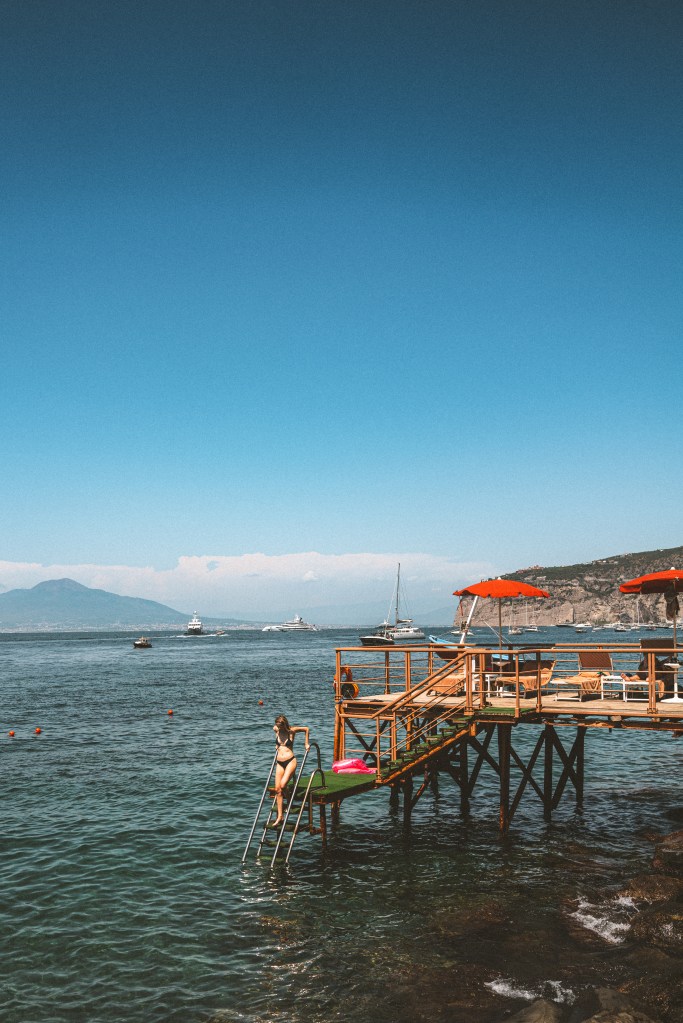
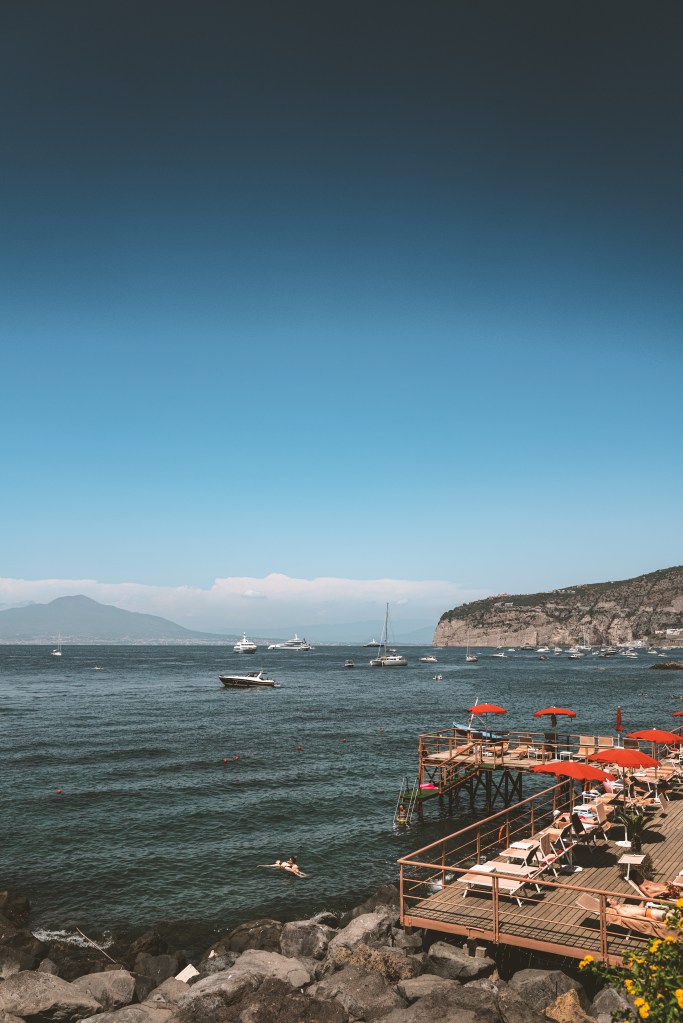
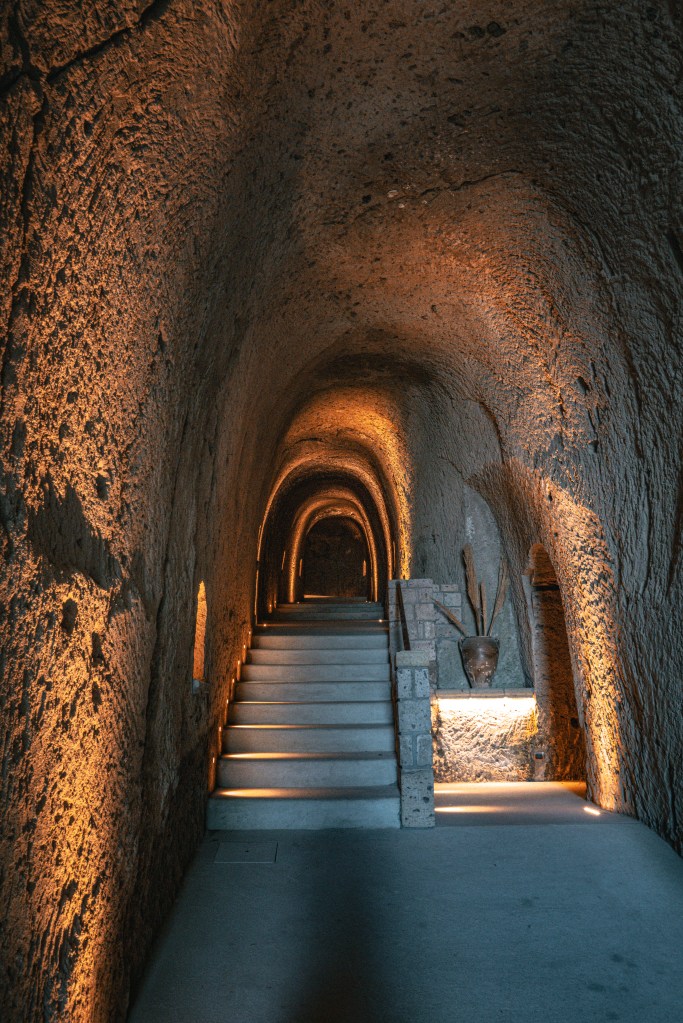
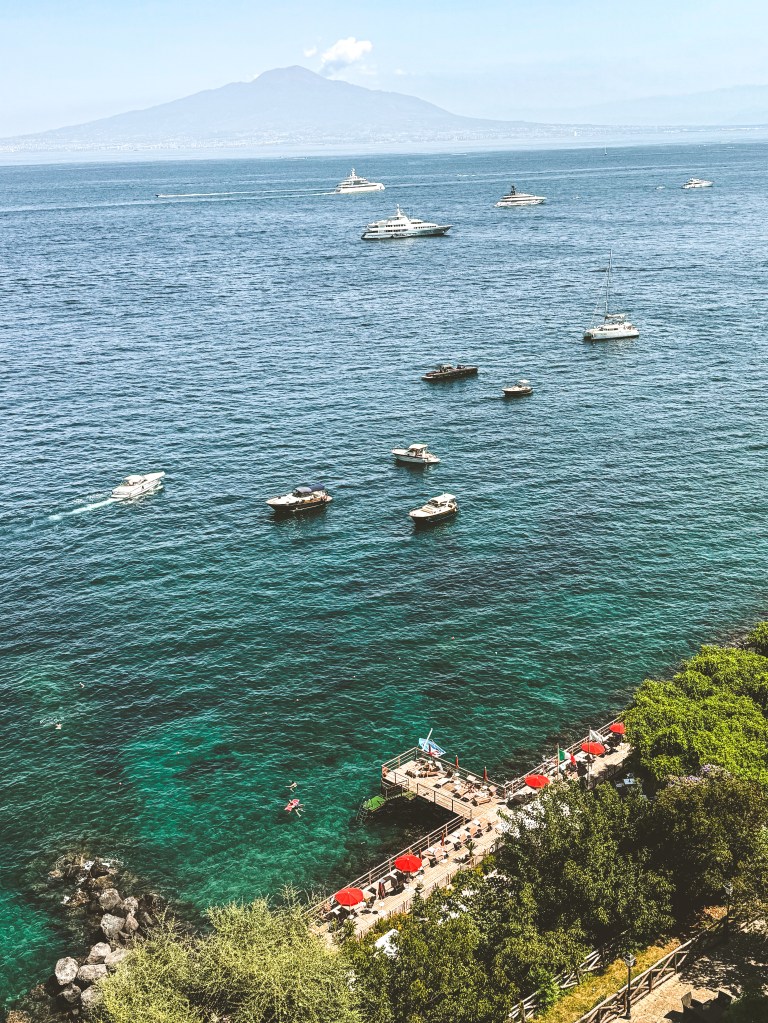
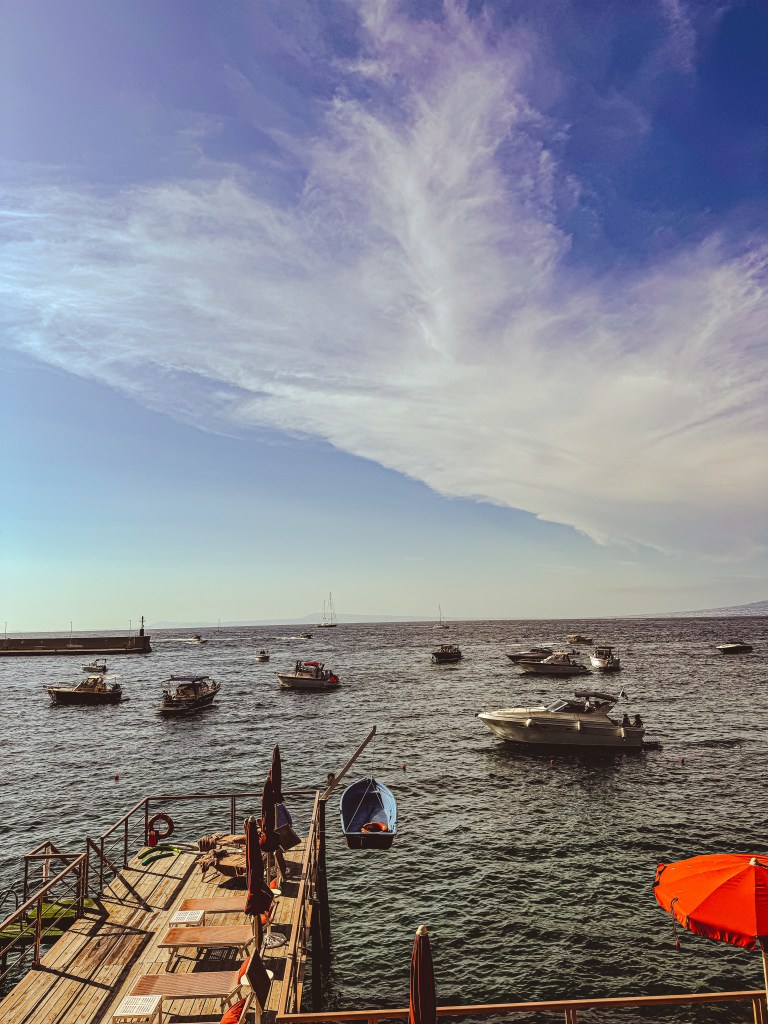
But at the garden’s edge, the real “Prezzo Forte”, a lift drops down through the cliff to a private bathing platform, a James Bond descent to the sea, martinis sadly not included, though easily arranged on your return.
“From the platform, the world felt framed in cinematic colour: the bay, Vesuvius, and yachts sliding past like background actors.”
It is that bathing platform that seduces, a timeless timber stage, exuding 1960s glamour, perched on the rocks, parasols in blazing orange above candy-stripe sun loungers, the sea lapping just beneath. Each morning my daughter and her cousins rushed straight there, as if the gardens and pool were mere preludes to this theatre of salt and sun. They swam, they laughed, they performed their own dolce vita, diving into water so clear it seemed cut from glass, emerging with hair slicked back like extras from Fellini. There were moments I half-expected Sophia Loren herself to climb the ladder beside them, to shake the sea from her shoulders and ask if the children might make room between their beds. From this platform, the world is framed in cinematic colour: the curve of the bay, Vesuvius on the horizon, and the eternal procession of yachts sliding past like background actors. Hours dissolved there, each one steeped in sunlight and style.
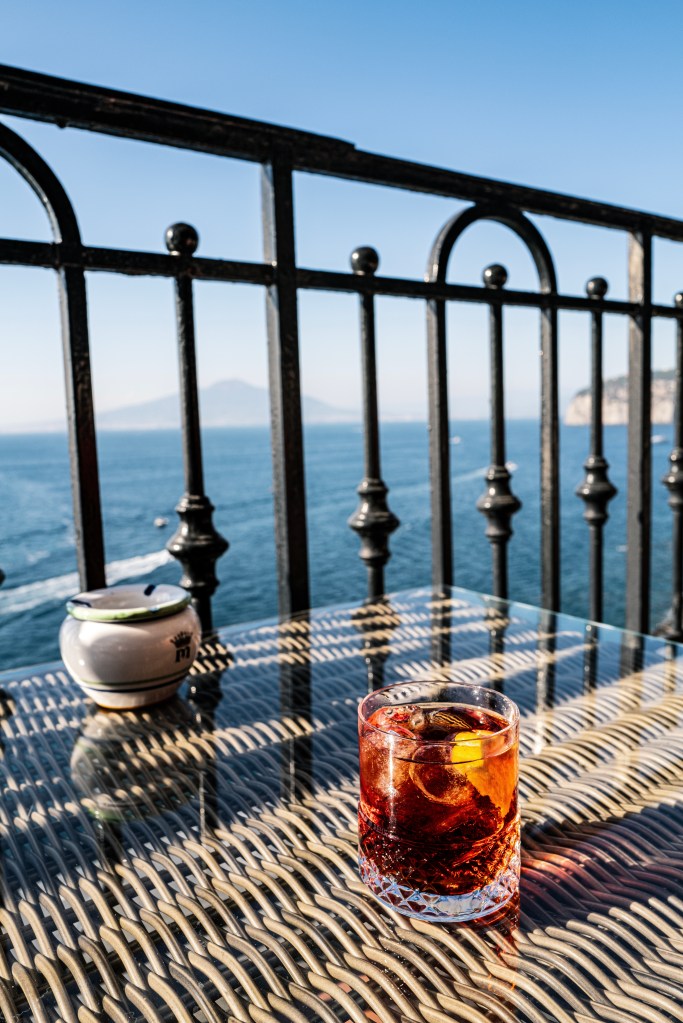
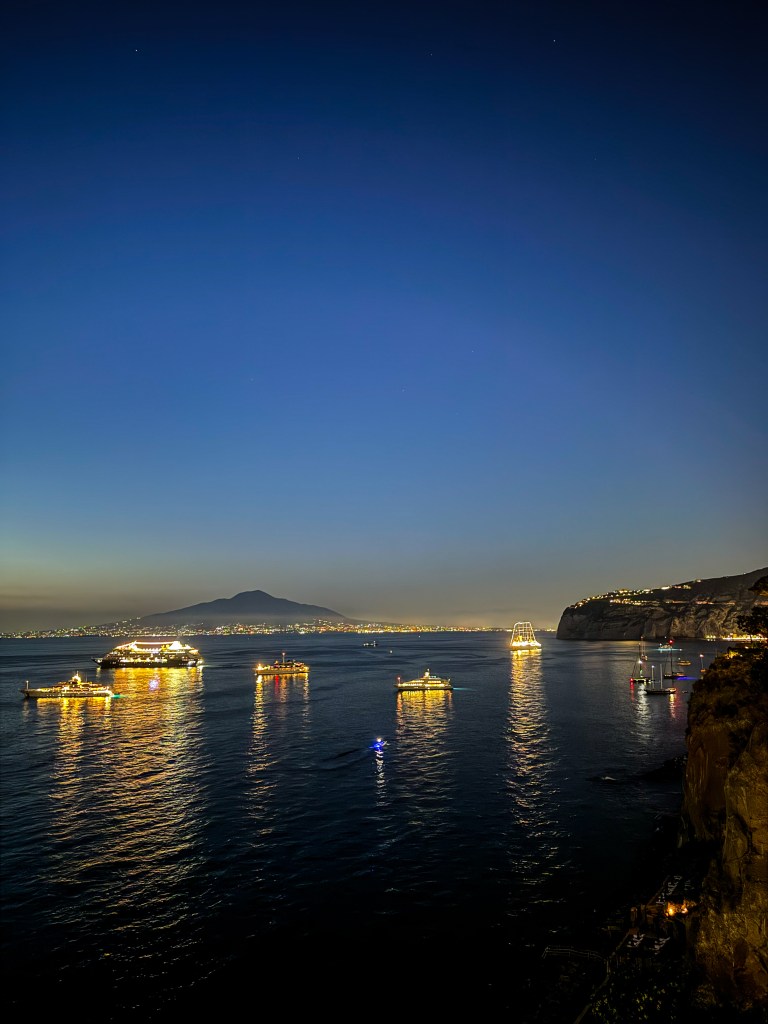
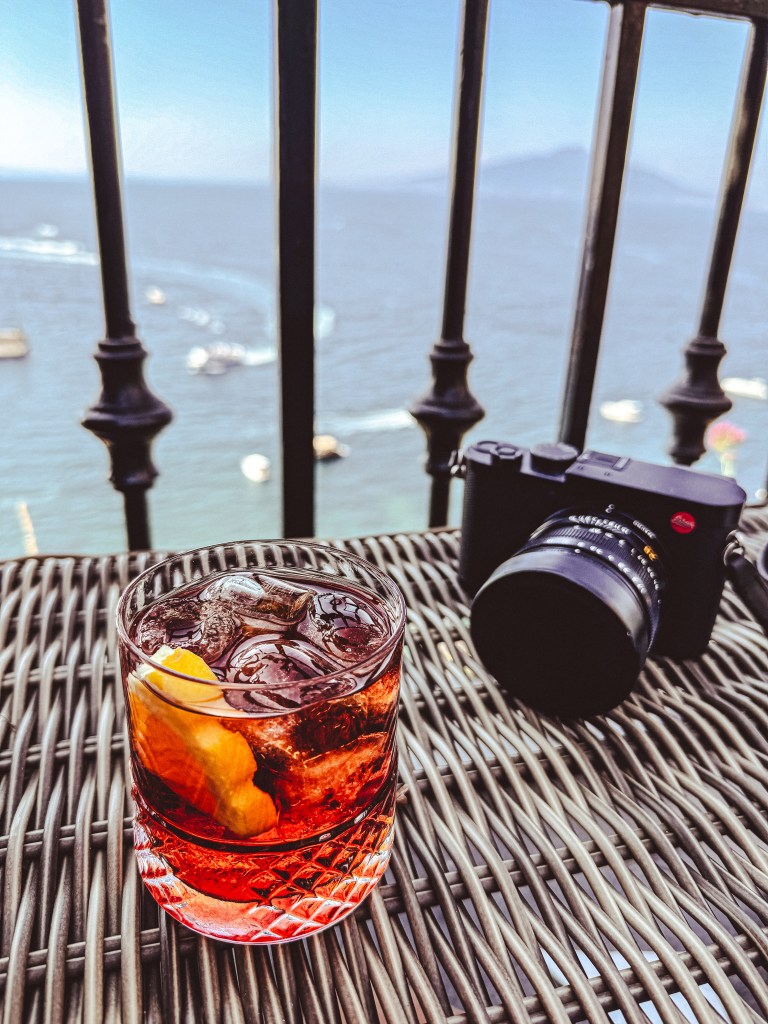
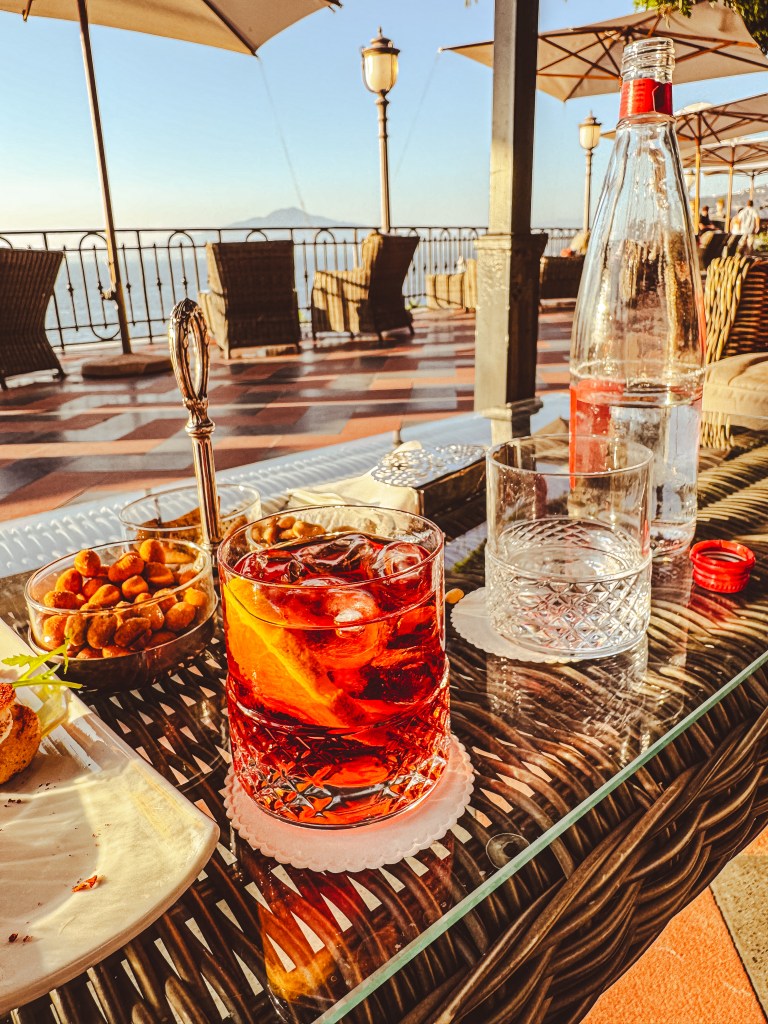
Bedrooms are fewer than two hundred, but they are treated as though each were a jewel box. Our garden sea-view suite came with a spacious bedroom and bath, a covered patio and a private garden from which the view spilled, unbroken, across the Amalfi coastline. To watch the sunset from there with a Negroni in hand was to live out one’s own Cinema Paradiso.
“To watch the sunset with a chilled Prosecco was to live out one’s own Cinema Paradiso.”
Rooms are dressed in Sorrentino classical style, wood furniture, silken fabrics, marble bathrooms, yet carry the comfort of the modern day. Etro toiletries, deep beds, and balconies that transform into private theatres at dawn. The suite wears hand-painted murals, frescos above the bed, like fine jewellery for the ceiling.
Food, as in all Italian dramas, becomes a central character. Breakfast is a daily opera: fresh fruit, still-warm pastries, espresso with a punch, all staged against windows flung wide to the bay. At Il Giardino, plates arrive that balance southern Italian generosity with Mediterranean lightness. Lobster linguine tastes like it has been pulled directly from the water below, while lemon risotto has the audacity to compete with the groves visible just outside. Ristorante Glicini, more formal, dresses the evening in candlelight and spectacle. Even a simple plate of spaghetti alla vongole tastes somehow cinematic here, the sort of dish that should be consumed with a soundtrack.
Service is another of the Royal’s triumphs. It is polished without ever being stiff, courteous but never aloof. Staff glide between tables with the ease of old hands, quick to notice the dropped napkin, quicker still with the second glass of wine. There is efficiency, yes, but also warmth, the kind of familial ease that turns guests into regulars, and regulars into part of the story.
It is this blend of operatic glamour and intimate humanity that makes the Grand Hotel Royal feel eternal. It belongs as much to the 1960s as it does to today, to an era of film stars and cigarette holders, of sunsets watched through dark glasses.
And then, inevitably, departure. Guests linger absurdly long at breakfast, as though one more cappuccino might delay the bill. But leaving here does not feel like leaving a hotel. It feels like stepping out of a story, one you’ll recount for years, with the same refrain: ‘We stayed at the Grand Hotel Royal.’ The sigh that follows will tell the rest.
“The Grand Hotel Royal belongs as much to the 1960s as it does to today.”





 garychaplin.com