
Which Gin/Vermouth for the perfect Negroni?
The Negroni is built on simplicity, an equal trinity: Vermouth, Gin, and Campari. Change one, and the drink shifts its character; remove one, and it ceases to exist.
Three spirits that taken individually will polarize, but taken together, they form more than a cocktail. They create a ritual: equal parts bitter, sweet, and strong. A drink that is as balanced as it is bold, as timeless as it is modern.
As Anthony Bourdian said:
“A Negroni is a perfect drink. It’s three liquors I don’t like, but put them together with a slice of orange. It works.
That first sip is confusing and not pleasant. But man it grows on you.”
My guide to making the Perfect Negroni is here, but what brands of that trinity do I recommend? Which Gin? Which Vermouth? And dare you swap out the Campari?
Campari
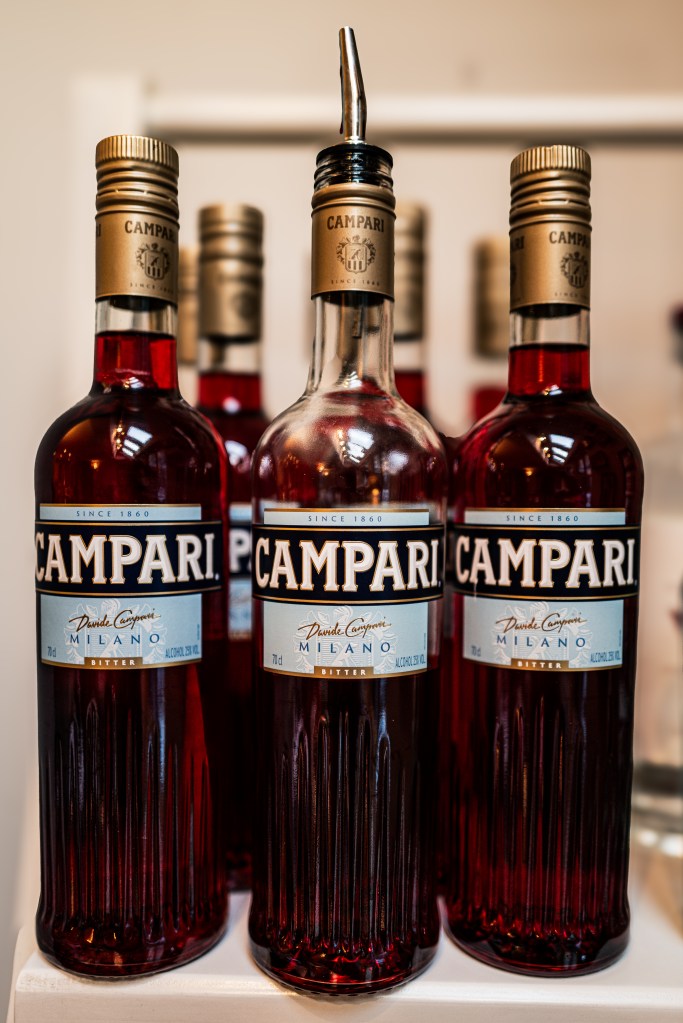
There is no Negroni without Campari. You can debate the gin, argue the merits of different vermouths, but for me, the bitter core of this cocktail has only one name. Campari provides the flavour, the colour & the identity; a bittersweet collision of orange peel, herbs, spice, and that flash of medicinal intrigue that tells you instantly: Negroni. It is polarizing on its own too bitter for some, yet it is precisely that intensity which creates the drink’s famous balance, pinning down vermouth’s sweetness and gin’s botanical lift.
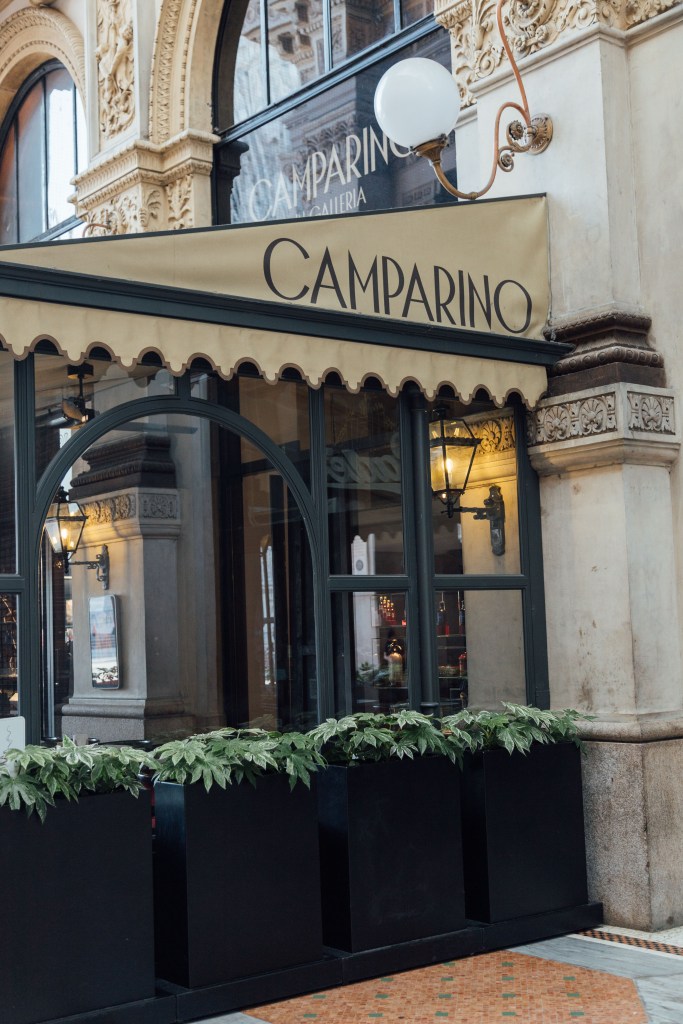
And its cultural status seals the deal, Campari is not simply an ingredient but the symbol of Italian aperitivo itself, a liquid shorthand for Milanese piazzas and golden-hour ritual.
Yes, alternatives exist: Aperol for the cautious, obscure amari for the adventurous. I’ve come close to liking Select Aperitivo [*see below] as a close Venetian alternative to the Milanese original. But for me, those are variations, not the standard. The Negroni has a red Campari heart.
Vermouth
Vermouth is the quiet architect of a Negroni, the part that binds gin’s steel and Campari’s fire into something civilised. The best vermouths add herbal depth, fruit, and spice, without letting sweetness swamp the drink. Pick the wrong one and your Negroni turns heavy and syrupy; pick the right one and it sings. Here are my seven favourites, each with a character that can tilt the cocktail in a different direction.

9 di Dante Inferno
My favourite. Bold and full-bodied, 9 di Dante Inferno brings a modern twist to Italian Rosso, inspired by the Dante’s Divina Comedia. Built on Dolcetto and Cortese wines, it reveals bright layers of red berries, cherry and orange, lifted by citrus zest. Herbal undertones and a gently bitter finish give it poise without excess sweetness. In a Negroni it adds fire and structure, intensifying the gin’s botanicals while amplifying Campari’s bitterness, creating a cocktail that feels vibrant, sinuous, and unapologetically complex whilst accentuating the deep red colour.
Cocchi Vermouth di Torino
Another true favourite. Cocchi achieves harmony where others lean heavy. Moscato-based, it delivers spice and freshness, ginger, cocoa, rhubarb, citrus, eschewing the overt vanilla that defines many Vermouths. There’s subtle acidity, a brightness that keeps the profile lifted while rosemary and orange peel round the finish. In a Negroni it works with precision, giving balance to Campari’s sharpness and complementing gin’s aromatics. The result is a cocktail that feels elegant and finely tuned, rich with fruit and herbs yet never overpowering.


Carpano Antica Formula
The classic benchmark, first conceived in Turin in 1786, Antica Formula remains a famous vermouth with gravitas. Vanilla rises first, generous and enveloping, followed by cocoa, black cherry, fig and a trace of orange. Smooth, gently sweet and luxurious, it carries a dessert-like warmth cut with herbal restraint. In a Negroni it transforms the drink into something velvety and indulgent, softening Campari’s bite and adding depth that lingers long after the sip; plush and opulent.
Punt e Mes
A true Turinese original, Punt e Mes translates to “point and a half”, one of sweetness, half of bitterness. Chestnut-ruby in colour, its nose is herbal and vinous, with a port-like depth edged by citrus and spice. On the palate it’s juicy yet taut, balsamic in tone, finishing with quinine bite and gentle astringency. In a Negroni it sharpens the profile, amplifying bitterness and complexity while keeping the drink beautifully balanced.

Bottega 1757
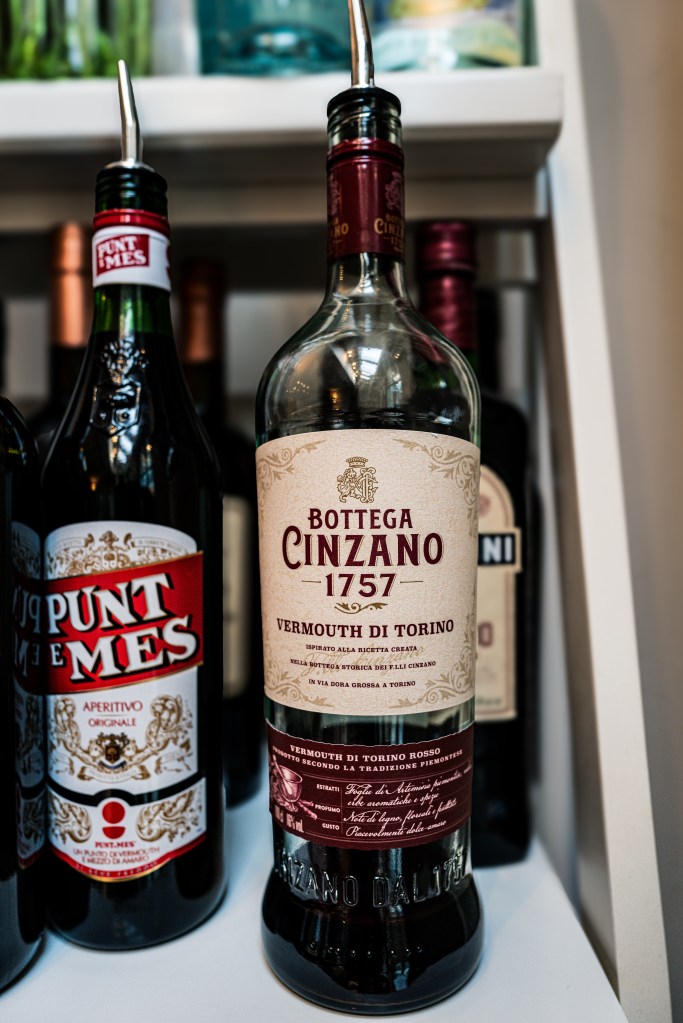
Created to honour Cinzano’s founding year, Bottega 1757 is a true Vermouth di Torino with polish and pedigree. Made from Italian wines and Piedmontese wormwood, it shows depth and refinement beyond the house’s standard bottlings. The profile is rich and aromatic: dried fig, vanilla, spice and a floral lift, finishing dry enough to let Campari’s bitterness sing. In a Negroni it delivers harmony and structure, robust enough to meet gin’s botanicals while adding elegance and complexity to the mix.
Martini Rosso
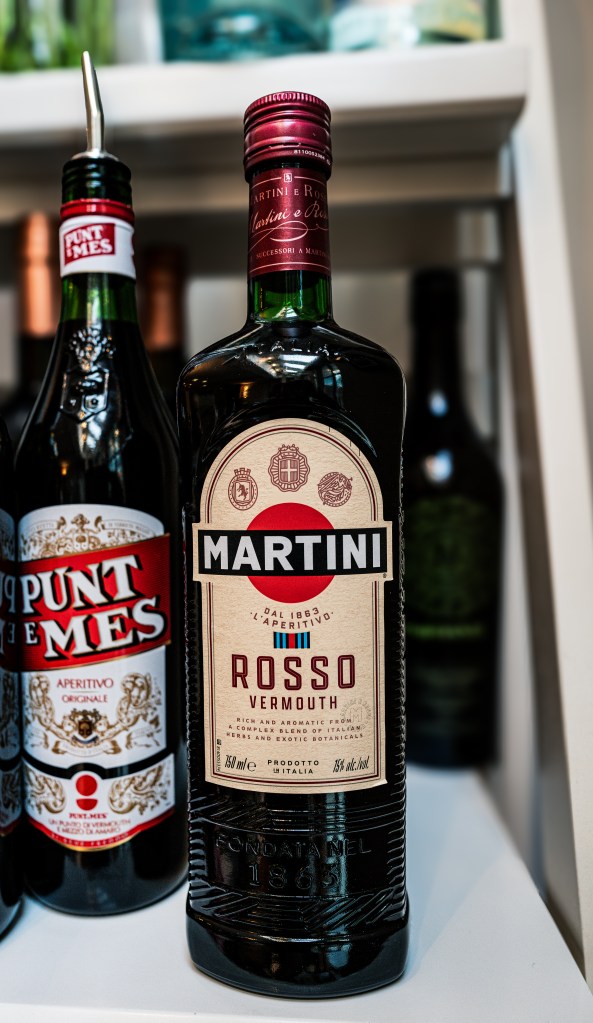
Perhaps the world’s most recognisable vermouth, and unfairly called the ‘supermarket brand’, Martini Rosso remains a benchmark, affordable, accessible, and versatile. Its profile leans lighter and sweeter than some, with caramel, raisin, vanilla, and spice layered over a port-like wine base, touched by tobacco, anise, and bay leaf. The nose is warm and inviting, the palate lighter and softer than artisanal rivals, finishing short but pleasant. In a Negroni it tempers Campari’s bitterness, offering balance and approachability, though at the cost of complexity. A reliable everyday choice.

Martini Riserva Speciale Rubino
A step up from the above classic Rosso, Martini Reserve Speciale Rubino has added weight and sophistication. Deep ruby in colour, it opens with red berries, cassis and a lift of pepper, underpinned by wormwood and woody tannins. The palate is bold, fruity and herbaceous, finishing long with spice and quinine bite. In a Negroni it brings richness and layered complexity, elevating the drink with a more structured, vinous character, full-bodied, aromatic, and balanced with confident elegance.
The Secret Eighth Option….
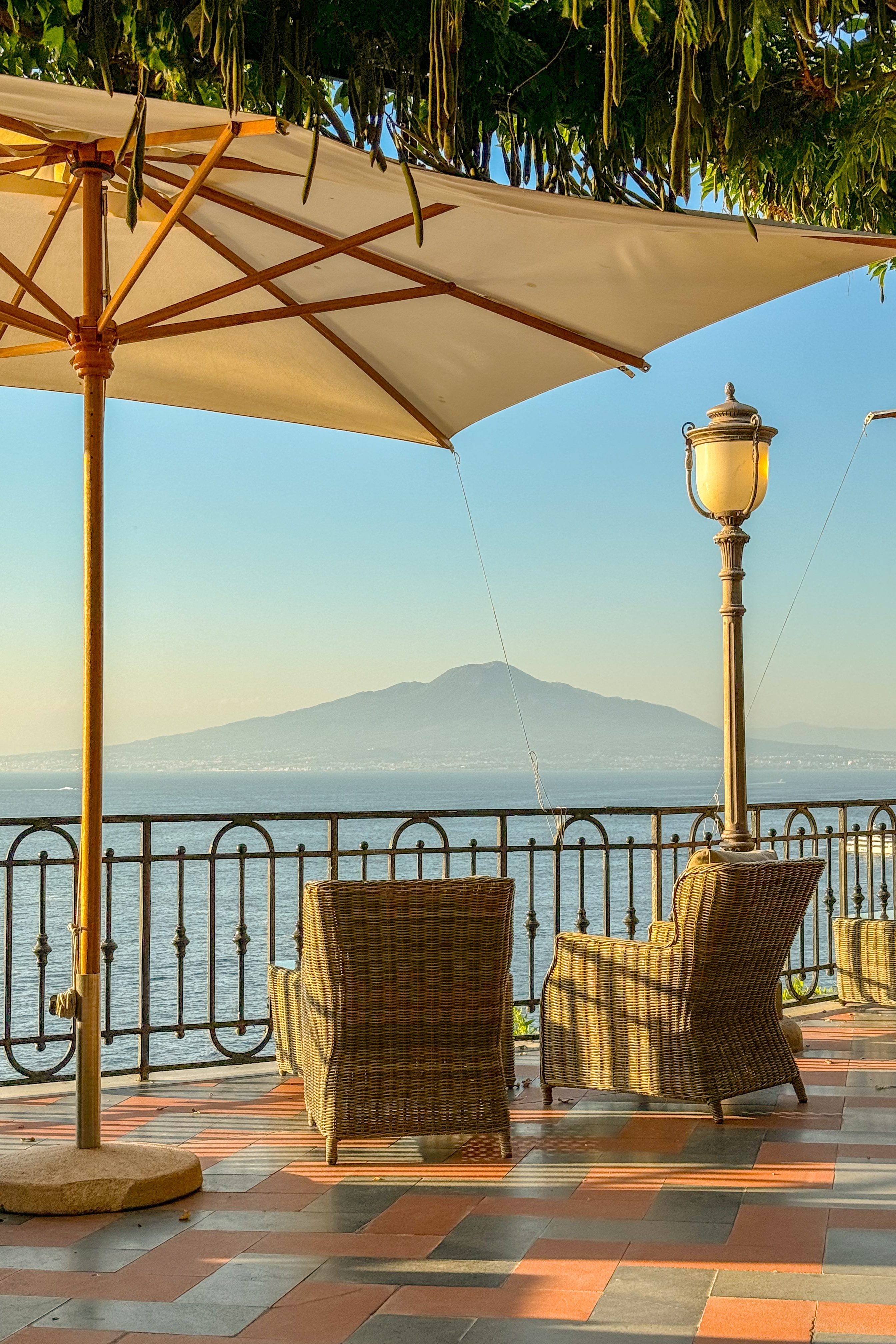
When discussing Negroni’s with the 60yr old head barman at the Caruso in Ravello (who had just made me the best Negroni I’d ever tasted), he let me into a secret, THE secret to his Negroni. The vermouth he uses wasn’t a vermouth….it was 5 vermouths. He blends 3 of the above and a couple of others. His exact blend really was a secret. It was 50% Punt e Mes, it also included Cocchi and Antica Formula. The other 2? I don’t know, other than they are Italian.
I’ve never blended 5, but I will often blend Martini Rosso 50/50 with either Punt e Mes or Antica Formula to lighten the drink whilst keeping the Negroni’s punch.
Gin
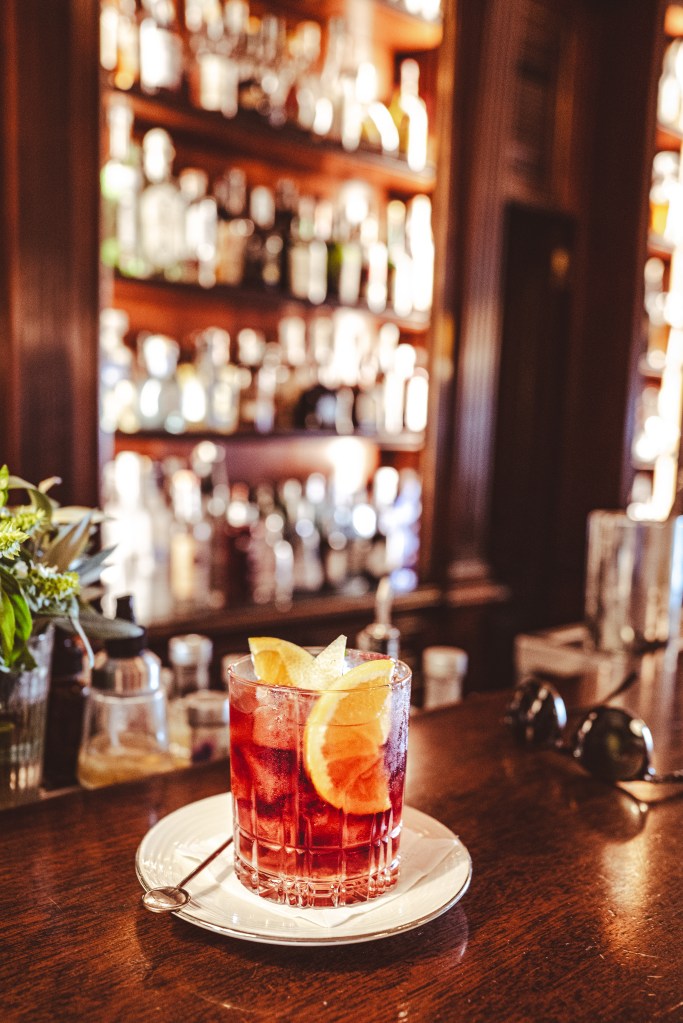
The final element of the trinity is gin, and there are so many to choose from, but very few that truly shine in a Negroni. Floral gins disappear, herbal gins can unbalance, and lighter spirits like Bombay Sapphire, for me, are too delicate against the robust Italian companions. For me, that usually means a juniper-forward London Dry Gin, especially an Italian one, even if more for culturally romantic reasons.
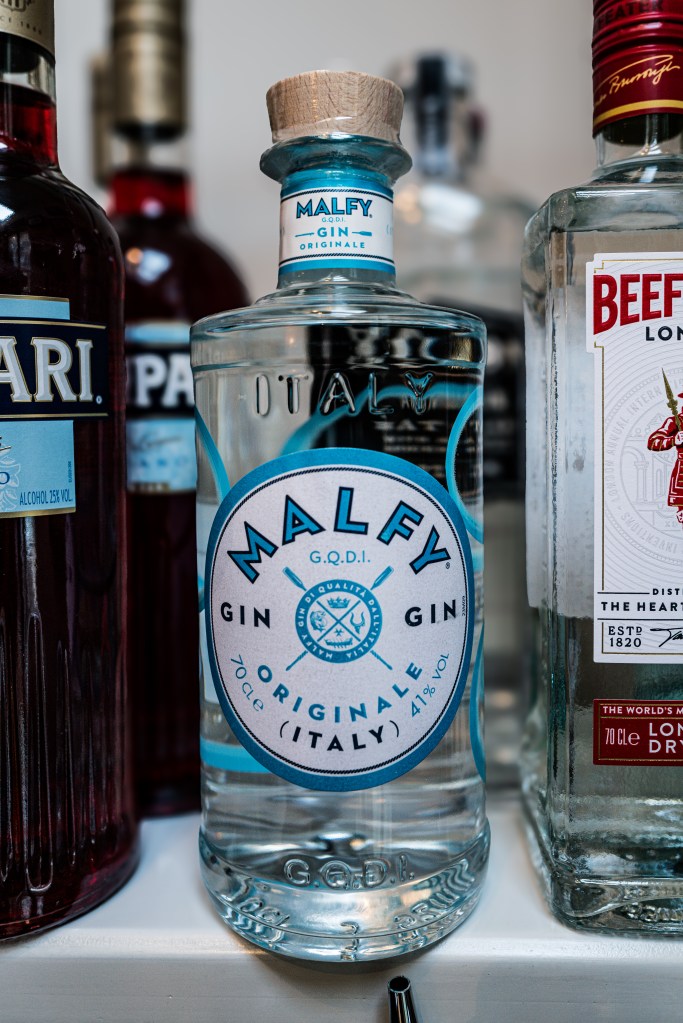
Malfy Originale
Italian in both spirit and substance, Malfy Originale brings the romance of the Amalfi Coast into your glass. Although distilled near Turin it blends lemons from both Sicily and Amalfi Coast along with cassia, and coriander. It’s a zesty, sunlit gin with just enough spice to keep things interesting. The citrus notes add a gentle lift to a Negroni, playing beautifully with the orange peel garnish. Clean, crisp, and distinctly Mediterranean, Malfy makes the cocktail feel like it’s been sun-kissed on the hills of Ravello; lighter, fresher, but still firmly grounded in juniper.
Tanqueray No. Ten
Distilled in the “Tiny Ten” still with whole citrus fruits, Tanqueray No. Ten is smoother and softer than its core sibling, leaning into grapefruit, lime, and orange. In a Negroni, that citrus core offers brightness and elegance, softening Campari’s bite and dovetailing neatly with the vermouth’s herbal sweetness. Less juniper-forward, more refined, it produces a rounded, fruit-laced version of the classic for a polished, citrus-kissed Negroni for those who prefer finesse to force.


Beefeater
A true bartender’s choice, Beefeater brings juniper first and foremost, backed by lemon zest, coriander, and the clean pine snap that makes a Negroni sing. Its nine-botanical recipe is classic, unfussy, and reliable. It has the strength to push through Campari’s bitterness without overwhelming the vermouth. Affordable, sturdy, and balanced, Beefeater is the dependable old friend of the Negroni world, never flashy, but always exactly where it needs to be.
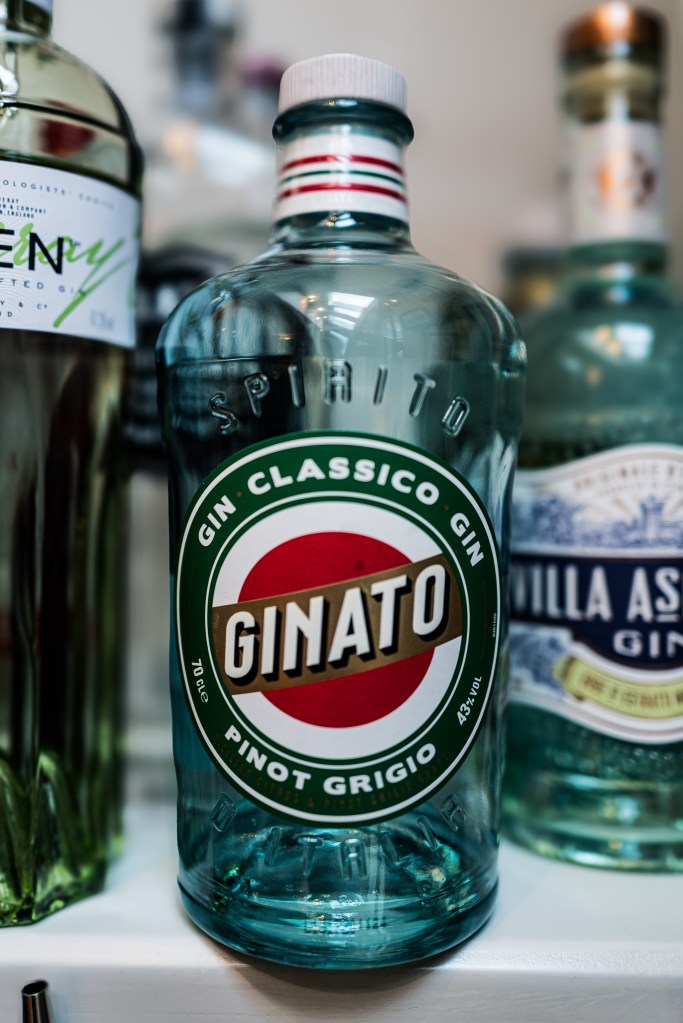
Ginato Pinot Grigio Gin
A true Italian creation, Ginato Pinot Grigio Gin fuses Tuscan juniper, Sicilian citrus, and northern Pinot Grigio grapes into something fresh, elegant, and unmistakably Mediterranean. Crisp lemon and lime sparkle against softer orchard-fruit notes, while a subtle grape sweetness rounds out the edges. It has the strength to hold its own in a Negroni, adding a gentle wine-like lift that plays intriguingly with vermouth; bright, modern, and deliciously Italian.
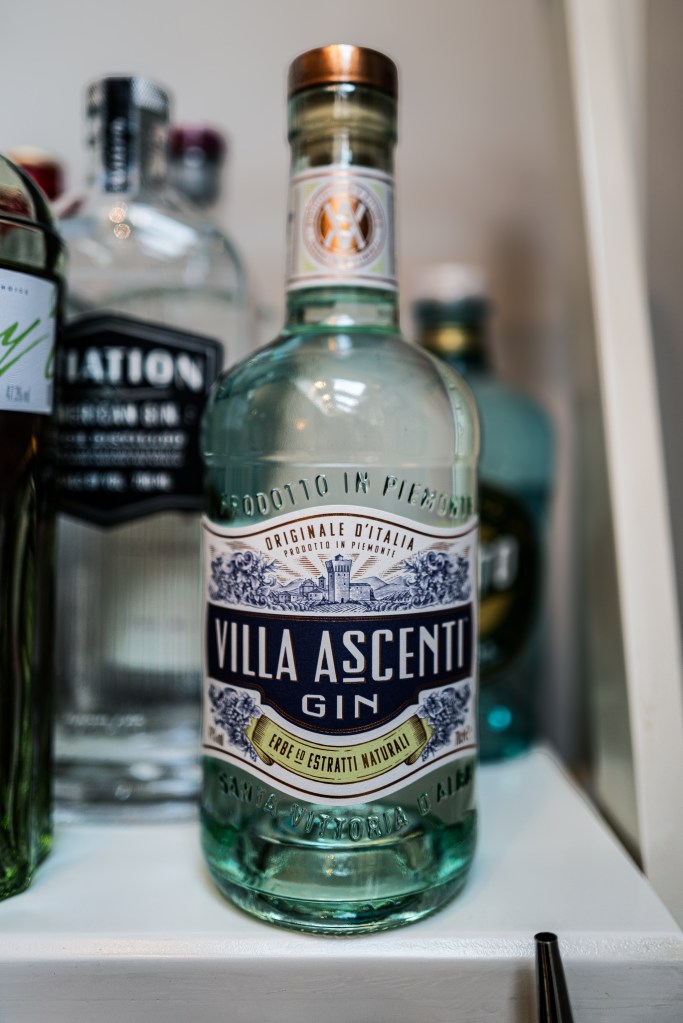
Villa Ascenti
Launched in 2019 from Piemonte, Villa Ascenti leans into its heritage with Moscato grapes, thyme, and Tuscan juniper distilled in copper stills. The result is smooth, velvety, and slightly sweet, with a freshness and lemon zest over a juniper base. At 41% ABV it’s lighter than some, making for a softer Negroni, less bite, more Mediterranean ease. It won’t overpower Campari, but nor does it bring knockout depth. A pleasant alternative when you want subtlety rather than steel.
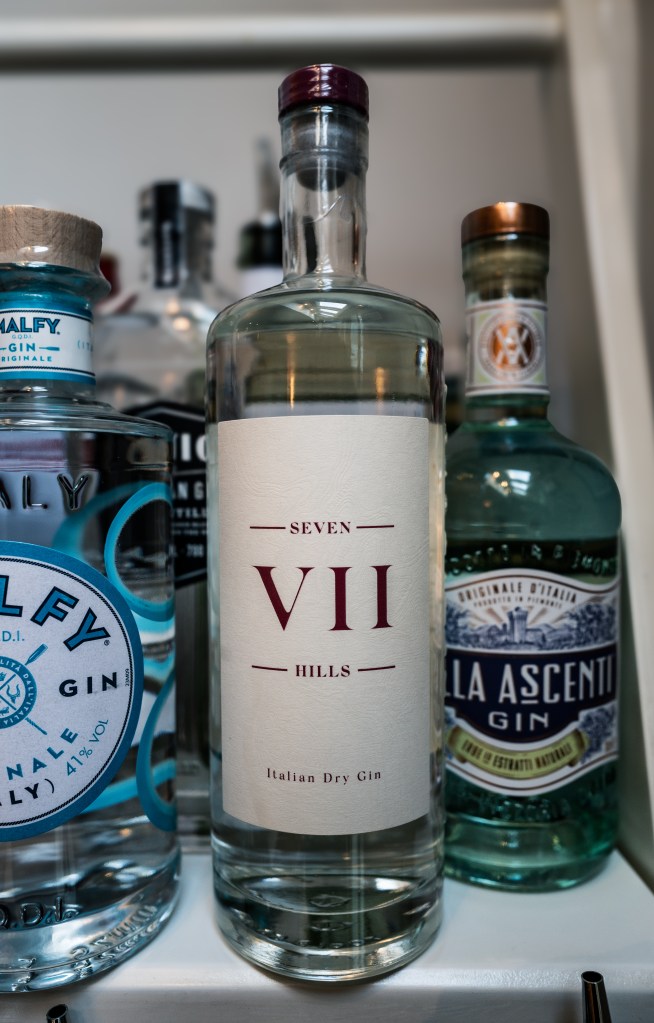
Seven Hills VII Italian Gin
Born near Torino and inspired by the seven hills of Rome, this proudly Italian gin was built with the Negroni in mind. Seven Hills seven botanicals, juniper, pomegranate, blood orange, chamomile, rosehip, celery, and artichoke, create a layered profile that’s citrusy, savoury, and faintly sweet all at once. At 43% ABV it holds steady against Campari’s bitterness, while the pomegranate and blood orange lend a lush, red-fruit echo that deepens the cocktail. Complex, aromatic, and justifiably Roman in spirit.
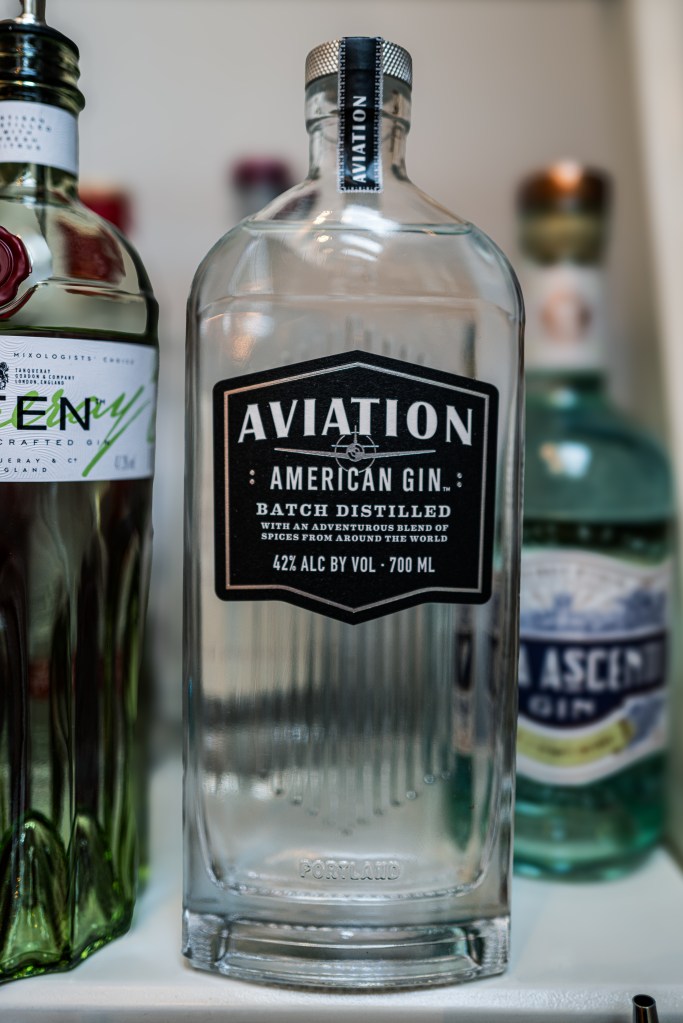
Aviation Gin
An American outsider in the Negroni world, Aviation Gin trades tradition for modern flair. Distilled with lavender, vanilla, cardamom, sarsaparilla, and more, it leans spicy and floral rather than too juniper-heavy. At 42% ABV it mixes cleanly, but in a Negroni its softer backbone compliment rather than overpower Campari’s roar. What emerges is a more delicate cocktail, earthy spice, hints of vanilla, and a fleeting citrus lift. A contemporary twist with a little Hollywood swagger, it earns its wings.
*The Controversial Enemy Within?
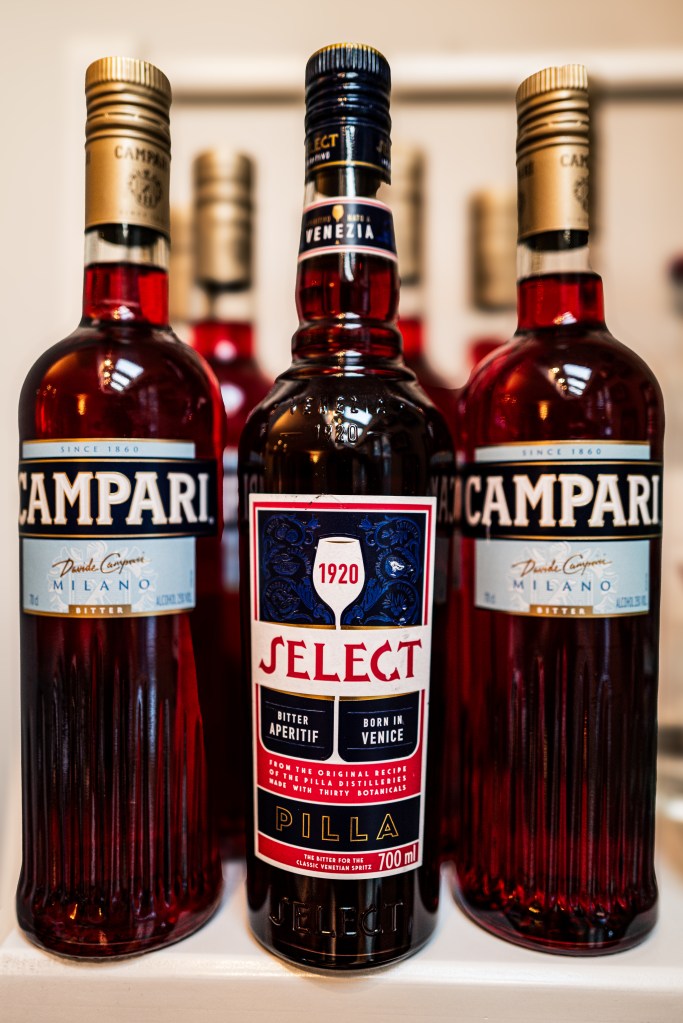
Select Aperitivo
Born in Venice in 1920, Select Aperitivo offers a distinctly Venetian counterpoint to Milan’s Campari. Crafted with 30 botanicals, including rhubarb and juniper, it sits at a gentler 17.5% ABV, which softens the attack and allows its spice and herbal notes to shine. On the nose, cinnamon, cloves, and green herbs come forward, while the palate opens with bitter gentian before giving way to vanilla, chocolate, and a reprise of warming spice. The bitterness is firm but not brash, the lower strength lending clarity and lift rather than force. In a Negroni, Select creates a lighter, more nuanced version of the classic—less punch, more perfume—playing especially well with juniper-forward gins. While Campari delivers brawn and intensity, Select offers subtlety and complexity, a Venetian accent that softens the edges. It also excels in a Spritz, where its balance of bitterness and spice can outshine both Campari and Aperol.
“The bitters are excellent for your liver, the gin is bad for you. They balance each other.”
— Orson Welles, after trying his first Negroni in 1947 in Rome
In the end, the Negroni never minds a little meddling. Gins give a sturdy base, some sharp with citrus, others relying on juniper’s punch, but it is the vermouth that does the real acting, slipping between velvet and fire, deciding whether the cocktail whispers or shouts. Swap between the seven above, or even blend two (or more), and you’ll discover seven different Negronis, each as true as the last. That’s the beauty: one recipe, infinite personalities.
People talk about “the Perfect Negroni” as though it were a single thing, bottled and waiting. In truth, the perfection is personal, shaped by the components you choose as much as by the place where you drink it. Every pour is a new conversation between sweet and bitter, restraint and indulgence.
And if that first taste makes you smile and raise your hands like Salvatore Calabrese, Italian flair and all, then congratulations, you’ve just made the best Negroni in the world.
The Negroni Files



The Best Negronis in…..



Comments? Suggestions? Anything else you’d like to see?


Fitness / Wellness / Healthspan


Gary Chaplin
Hotels
Check out my thoughts on some of my favourite hotels





 garychaplin.com