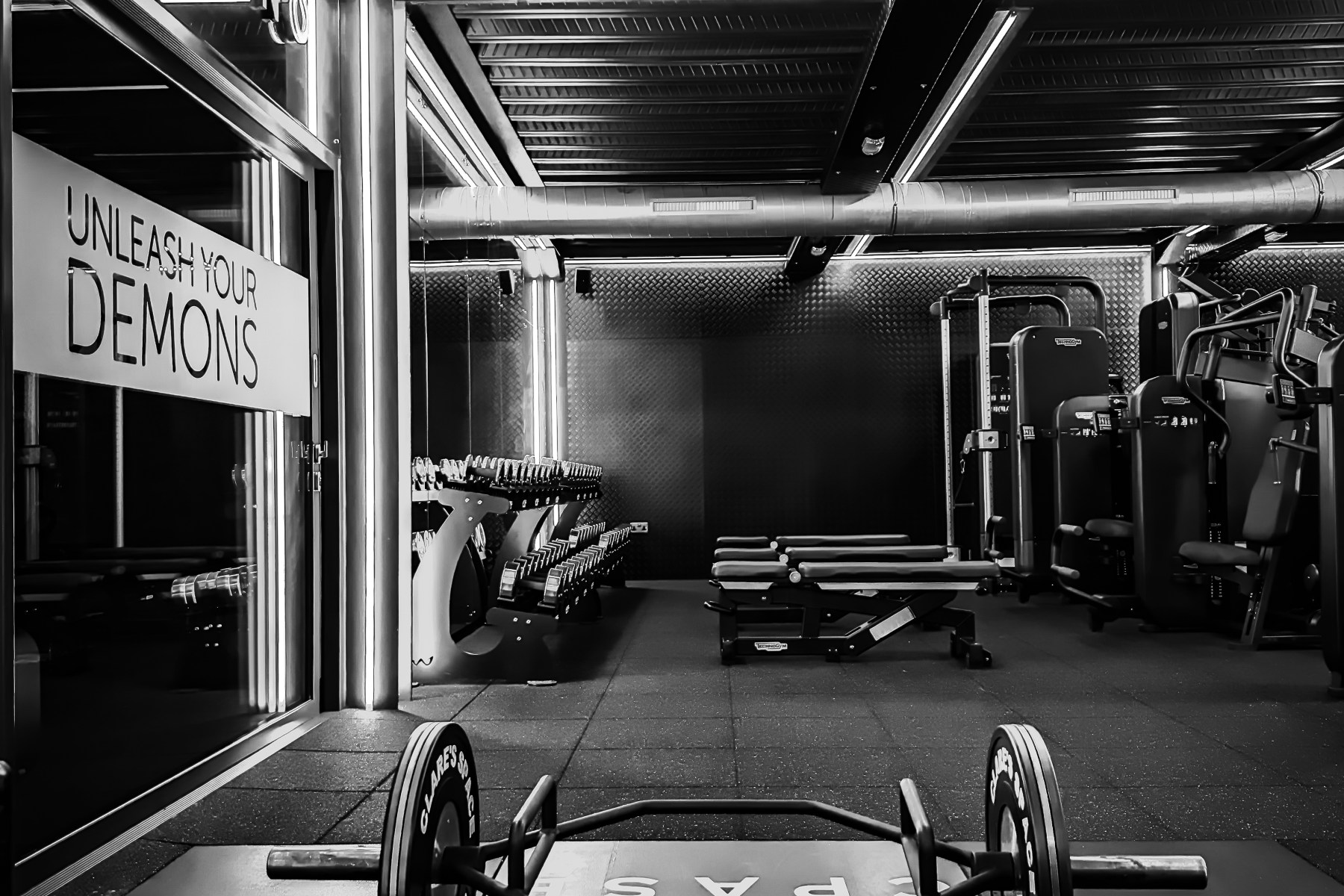
Strength for Life: The Longevity Case for Resistance Training
“If you have the aspiration of kicking ass when you’re 85, you can’t afford to be average when you’re 50.”
Peter Attia
I get asked about my training a lot. So here’s my tale, and how I’ve unwittingly done myself a huge favour.
I’ve lifted weights since I was 14yrs old. I’d just had the s**t kicked out of me in the school playground and a teacher, Mr Hewitt, a former bodybuilder, pulled me to one said and asked why I didn’t fight back.
I replied with a shrug worthy of an apathetic Frenchman and he invited (ordered) me to his afterschool weight-training club. Twice a week, strictly free weights, gradually increasing in weight.
12 months later, the same bully picked on me in the playground. I lifted him off the ground and threw him against a wall (and in turn threw me into a detention).
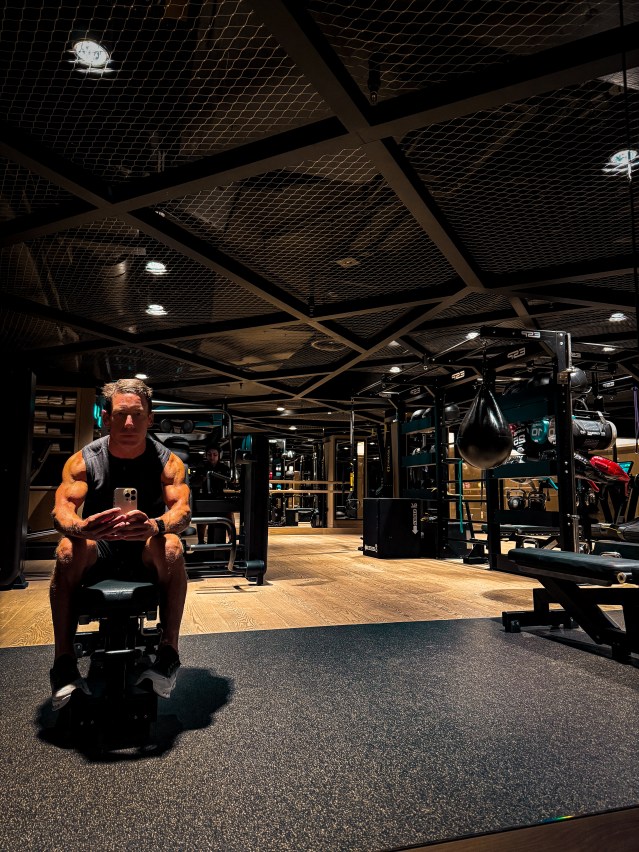
I’ve engaged in resistance training ever since. Now approaching 40 years later. Couple with diet and cardio exercise it’s fought my natural genetic predisposition to be overweight, given me bumps in the right places, firmed up any less desirable ‘soft wobbly’ bits and given me confidence.
But it’s only in the past decade have I discovered the favour I have been unwittingly doing to my future self and the importance of muscle mass to promote and ensure longevity.
In many longevity conversations, greater cardiorespiratory fitness (CRF), running, cycling, aerobic conditioning etc dominate the narrative, and rightly so. But resistance training is the inescapable partner: structurally, metabolically, psychologically indispensable. Science now supports it with ever-growing weight.
“Muscle isn’t decoration; it’s infrastructure.”
The One-Inevitable Decline (Unless You Fight It)
After about age 30, we begin to drift downhill. Harvard Health reports you lose 3–5% of muscle mass per decade if you do nothing. By the time you hit 70, you may be robbed of a quarter of your strength; by 90, likely over half. This is sarcopenia in full effect, the slow dismantling of your body’s scaffolding, and it’s not just an aesthetic problem.
Loss of muscle is far more than “getting flabby.” It’s the erosion of your structural resilience, your metabolic engine, and your fall-safety net. Mayo Clinic McPress notes that the muscle fibres used for lifting heavy objects are precisely those lost most rapidly in ageing but rebuilding them is possible. For the sexagenarians and septuagenarians that might be your grocery-carrying, grandchild-lifting, stair-climbing capacity waning, but for all of us it’s a matter of longevity, adding quality life not just years. Let it go, and later life becomes defined by fragility, dependency, and decreased quality.
Bone, too, suffers. The tugging and pushing of muscles on bone stimulate osteoblasts (bone-builders). Harvard Health writes that strength training can slow and sometimes reverse bone loss/weakening including osteoporosis. Without mechanical load, bones “listen” to gravity and say, “I’ll get weaker, thanks.” You don’t want that.
Muscle also happens to be the body’s largest glucose sink. Less muscle means poorer insulin control and higher metabolic risk. Mayo Clinic studies show that active muscle secretes substances that help cells absorb sugar more efficiently. In short: weak muscle, weak metabolism.
Resistance Training & Longevity
Science prefers randomised trials. But for long-term questions like “does strength training extend life?” we rely on observational data. And the signals are strong.
Adding weightlifting, even in isolation, was associated with 9–22% lower risk of death (Harvard Health). When combined with aerobic exercise, that association jumps: those doing both had 41–47% lower mortality risk compared to inactive folks. That’s nearly half the risk!
Another Harvard-sourced study found that people who did strength training at least twice weekly had lower all-cause mortality, even controlling for aerobic activity. A Harvard Chan School meta-analysis estimated that even just 60 minutes per week of strength training correlated with 10–20% lower risk of premature death.
These findings don’t prove causation (the healthier are more likely to lift), but the size and consistency of the effect are tough to ignore.
Two key areas stand out: protection against falls, and protection against neurodegeneration: Dementia.
Strength as a Lifeline: Defending Against Falls in Old Age
The gravest threat to over 70s isn’t a heart attack or cancer, it’s the fall you never saw coming. Even a “minor” tumble can cascade into a fracture, prolonged immobility, and a descent into fragility. But here’s where strength training becomes less of an aesthetic tool and more of a lifeline.
Repeated randomised controlled trials (RCTs) and meta-analyses now shows that resistance training, especially when coupled with balance work, cuts fall rates in older adults by as much as 70%. For instance, a systematic review of RCTs found that strength and balance interventions significantly reduce both the number of falls, the severity of falls, the severity of injuries from falls and the number of fallers compared to control groups. Another analysis by AAFP showed multiple types of exercise reduce fall-related fractures by 40 percent in adults over 50.
In blunt terms: if you want to dodge the Fall → Fracture → Frailty spiral, lifting weights earlier in life and continuing into your older years is among your best countermeasures. Strong legs don’t just help you walk, they help you stay walking.
Strength of Mind
It turns out that the secret to a resilient brain may lie less in crossword puzzles and more in deadlifts. For decades, aerobic exercise has been the darling of dementia prevention, but a quiet revolution is taking shape in the gym. Evidence now suggests that resistance training can do more than sculpt muscle; it may literally remodel the aging brain.
Recent trials have shown that older adults who lifted twice a week preserved key regions of grey matter, notably the hippocampus and precuneus, both essential for memory and cognitive control. The biology makes sense. Resistance training boosts IGF-1, a growth factor that keeps neurons alive, lowers homocysteine, a compound linked to vascular and cognitive damage, and dampens inflammation, the slow-burning fuse beneath most neurodegenerative disease.
Think of it as training your metabolism to protect your mind. More muscle mass means better glucose regulation, fewer vascular insults, and steadier blood flow, the very conditions a brain needs to thrive.
The lesson? Strength isn’t vanity; it’s neurology. Each rep you lift today is an investment in tomorrow’s clarity, a hedge against the fog that steals identity before it steals life. In the end, it may not be crossword puzzles that save us, but squats.
“Strength isn’t vanity; it’s neurology.”
Why Resistance Training Deserves Its Place on Your Weekly Agenda
If the case above isn’t urgent enough, here’s how resistance work pays dividends across systems:
| Benefit | Mechanism & Evidence | Why It Matters |
| Preserve/Regain Loss Muscle | Stimulus forces adaptation (hypertrophy + neural recruitment) | Maintains strength to perform daily tasks |
| Bone strength / reduce osteoporosis | Muscular forces tug bones → osteogenesis | Less fracture risk, more structural integrity |
| Metabolic health | Muscle uptakes glucose, secretes myokines | Improves insulin sensitivity, lowers diabetes risk |
| Blood pressure, lipids, vascular health | Transient vascular stress leads to arterial adaptation | Strength training improves BP, sugar, lipids |
| Cognition / brain health | Neural-muscle signaling, increased cerebral blood flow | Resistance training slows hippocampal decline |
| Fall risk / balance / stability | Strengthens stabilizer muscles, core, proprioception | Fewer falls, more confidence in movement |
| Longevity / survival | Observational association across many cohorts | As above |
The Mayo Clinic paper “Strength Training: Get Stronger, Leaner, Healthier” underscores that strength training can improve joint health, burn calories, preserve lean mass, enhances bone density and reduce injury risk.
Another recent systematic review by PMC tied moderate-to-vigorous exercise + strength training + interactive sport to improved life expectancy
It’s not just aesthetic, it’s structural maintenance.
How Much, How Heavy, How Often?
If I offered you a pill that gave 10–30% lower mortality, would you ask, “How many milligrams do I take?” That’s exactly the question for resistance training. It’s not zero or heroic, it is somewhere in between, and it depends on the person. But if that pill came with zero side-effects and zero risk of taking too much, would you want as much as possible?.
Minimum dose: Twice per week is the threshold beyond which survival gains appear according to both Harvard Health & Mayo Clinic
Intensity: Older adults aiming for strength often target 70–85% of their one-rep max (1RM). If 1RM testing is unsafe, choose a weight you can do for c10 controlled reps, with the last few being tough.
Volume & progression: The principle of progressive overload still applies, gradually increase load, reps, or density. You don’t need to lift maximal weights, but the final reps should feel meaningfully hard.
Two sessions a week might look like:
- Warm-up (mobility, activation)
- 4–6 compound movements (squat, hinge, push, pull, lunge, core)
- 2–3 sets each, 6–12 reps
“Lift for longevity, for kindness to your future self, for every stair you want to climb unaided beyond your eight decade.”
Diet, Protein & the Maxim: You Can’t Out-Train a Bad Diet
As I said in my Intermittent Fasting piece: you can’t out-train a bad diet. Strength work and exercise in general without sensible nutrition is like building on sand at any age, never more so than in the second half of your life.
Muscles need protein, micronutrients, and calories to adapt. For older adults a gram per pound of bodyweight is a sensible target, around 30–40g of high-quality protein per meal tends to trigger muscle protein synthesis, echoing Gabrielle Lyon’s work on muscle-centric medicine. For muscle growth, the average adult might need up to 250g or protein per day.
But we talk about Protein as a product, a nutrient but Protein isn’t a single thing, it is actually 20 different Amino Acids or which 9 are essential. Each of these Amino Acids do something different, for example Leucine is critical for muscle health, growth and muscle protein synthesis. Ensuring sufficient is key for maintaining let alone developing muscle mass.
[EDIT: In Peter Attia‘s October 20th Podcast #369 with Rhonda Patrick, they suggest that protein intake should be targeting 2g per KG of bodyweight, and as protein synthesis (the act of extracting Amino Acids from protein) decreases with age, that should arguably increase to minimise sarcopenia.]
Combine diet and resistance training and ensure sufficient quantities of the right proteins, and your returns multiply; design your lifestyle around them both and you’ll achieve fitness, physique and wellbeing in your 50s that you could only dream of in your 30s.
How to Actually Start
If you’ve never lifted weights before, starting is the challenge. Gyms can be foreboding places, home equipment expensive and compromised.
My advice? Engage a personal trainer at a nearby gym. Doesn’t have to be permanent, but get them to show you what to do, how to do it, when to do it and how often to do it. (and choose a gym that is nearby/convenient, you don’t need logistical hurdles to dissuade attendance – I’ve trained at gyms solidly for almost 40 years, never one more than 3 miles from home or office).
Beyond that, schedule your workouts in your diary, even if not with a personal trainer, just as you would meetings, doctor appointments, hair appointments – your workout has just as much credibility to be there.
- Start light and track progress. Record weight, sets and reps.
- Initially focus on the big six: squat, hinge, push, pull, carry, lunge.
- Prioritise form, not ego. 12 perfect reps with a lighter weight is better than 4 poorly executed with heavier.
- Find community and/or a training partner, accountability multiplies consistency.
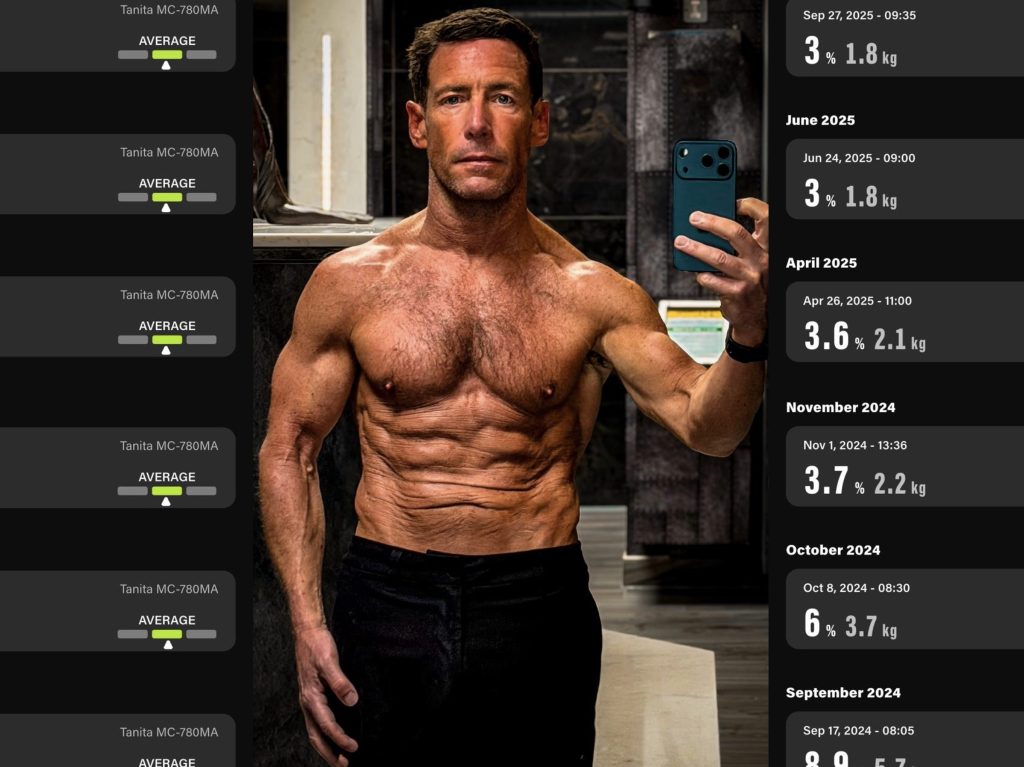
- Reassess every few months; progression fuels motivation. Photos, body composition or even just weights/reps/sets.
- Rest well. Recovery is anabolic, not lazy.
When I began lifting weights, the only source of new exercises was a tiny handful of fitness magazines that I would await the arrival of at the newsagent. Today there are millions, literally millions of workouts online. Even more simply, you can use AI to design a workout for you with a few tiny instructions.
My Weekly Exercise Framework
There is no right and wrong route to training. It’s a product of lifestyle, commitments, objectives and experience. It is wholly valid to schedule exercise into your day as you would any other commitment, but what that looks like is always personal.
30 years ago I trained after work. My gym was on the way home, near the end of a 35mile commute (remember them?) I left the office between 6 and 7, got to the gym 60mins-ish later. I found it too late. So, I switched to a gym near my then office (and in the same complex as my office provided car park), left home around 5.30am, had an easier commute into Manchester, trained, showered and got into the office around 8am.
With no office to commute to my routine has evolved again. I get up when I wake up naturally; never setting an alarm, but it’s always around 5am. I jump on my static bike (KICKR Bike) and do a 90-120mins session.
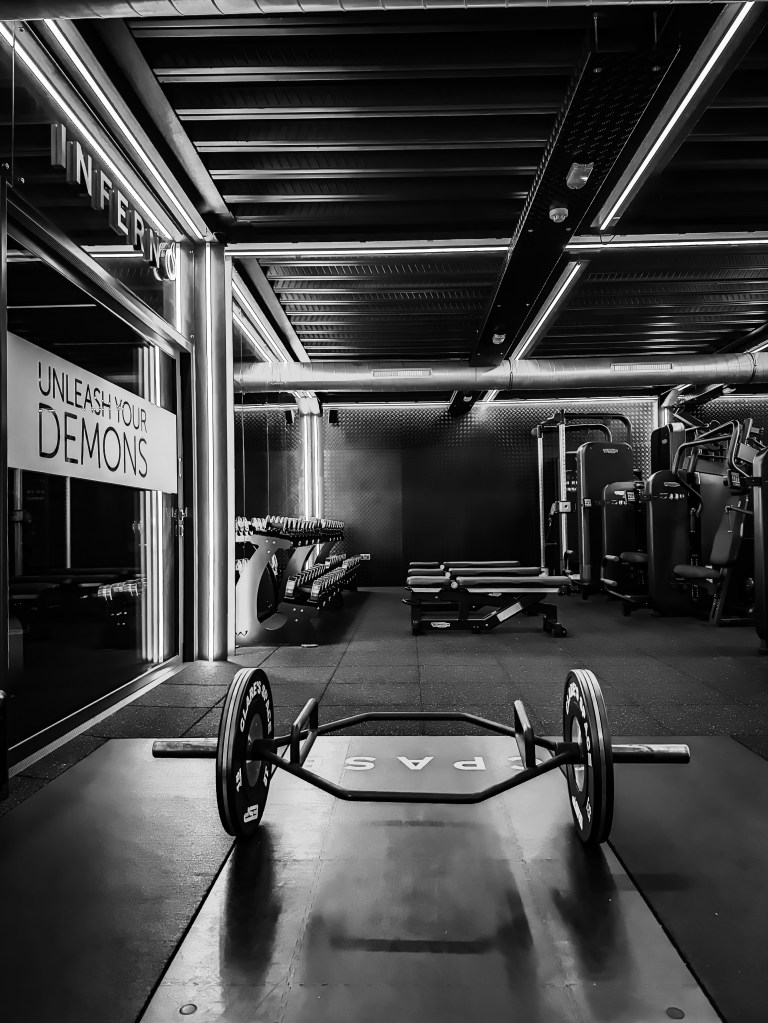
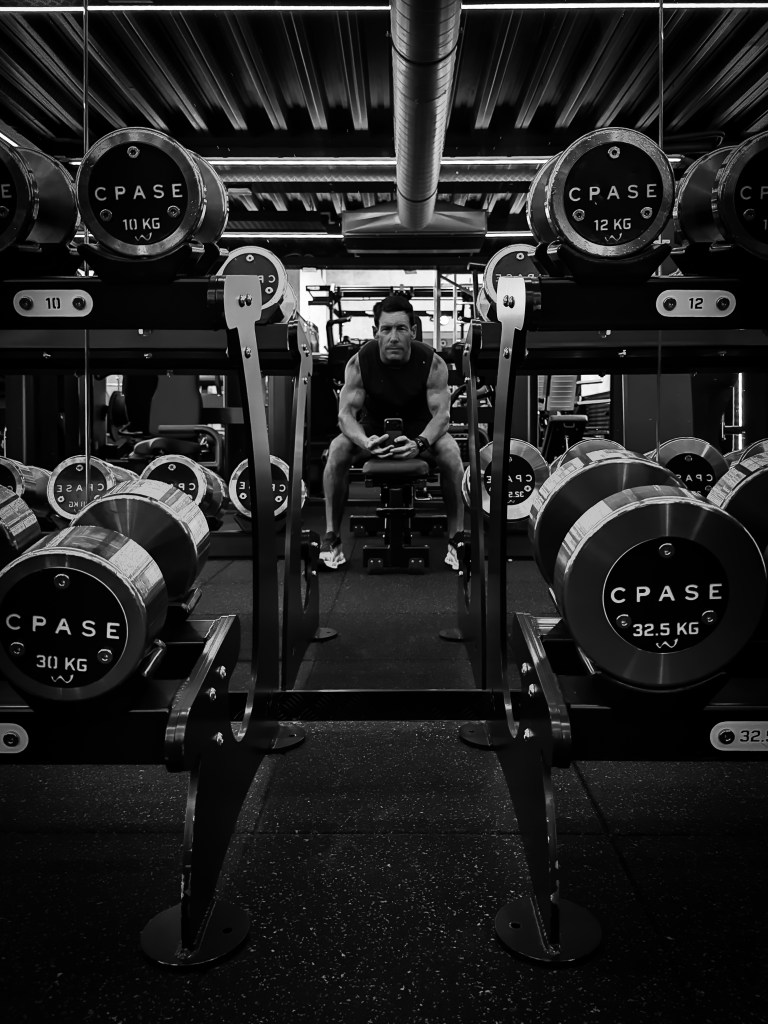
I finish, get my daughter up and moving, squeeze in 30mins work addressing anything urgent then do the school run, then straight to the gym, CPASE.
I do resistance training 6 days per week and cardio (bike) 6 days per week. My training week looks like this:
Mon – Fri
90-120mins static bike at home
60-90mins at the gym:
10mins stretching/rollering (become a non-negotiable after turning 50)
45-60mins resistance training, daily rotating body part focused workouts
- Chest
- Shoulders/Back
- Arms & legs (gentle, the bike is prime leg focus)
5-10mins abdominals every day
5mins stretching those body parts

Additionally do Yoga & Pilates once each, InfaRed sauna and Cryochamber twice each week
Saturday
60-90min resistance session at the gym as above plus Sauna & Ice Bath
Sunday
Usually go out on the bike, 2-4 hours
Final Thoughts (Memo To Your Future Self)
Strength training isn’t optional for longevity. It’s the structural pillar of aging well. Aerobic work fuels your engine; strength preserves your frame; diet supplies your raw materials; rest stitches it all together.
You’ll look at your 80/90/100-year-old self in the mirror one day. Will you shrug and say, “Well, I tried,” or smile and say, “Here, pass me my (great) grandchild”?
We’re not just decorating our bodies with resistance training; we’re designing them, future-proofing them.
Lift for longevity, for kindness to your future, for every stair you want to climb and every ground you want to rise from unaided.
Be the engineer of your body’s future, because weak muscles don’t age well, and strong ones age brilliantly.

Other Fitness / Wellness / Healthspan Subjects:



Comments? Suggestions? Anything else you’d like to see?


The Negroni Files






The Best Negronis in…..






Hotels
Check out my thoughts on some of my favourite hotels









 garychaplin.com